
How Healing Happens
Art as Process, the Nervous System and The Art of Repair

We speak often about healing.
It is a word that has been stretched across many meanings.
Sometimes it promises transformation. Other times it softens pain. Often it is whispered as a doubt-filled prayer when life has been disrupted beyond what we imagined we could carry.
Yet when we ask the deeper question of how healing actually occurs, the answer becomes more grounded and at the same time powerfully mysterious.
Healing is not curing and rarely happens through a single realization or breakthrough moment. More often it unfolds through time and benefits from process. Through small acts of understanding and integration as the nervous system slowly learns to trust again. This is the art of recognizing and reorganizing what must shift inside the body, spirit and psyche.
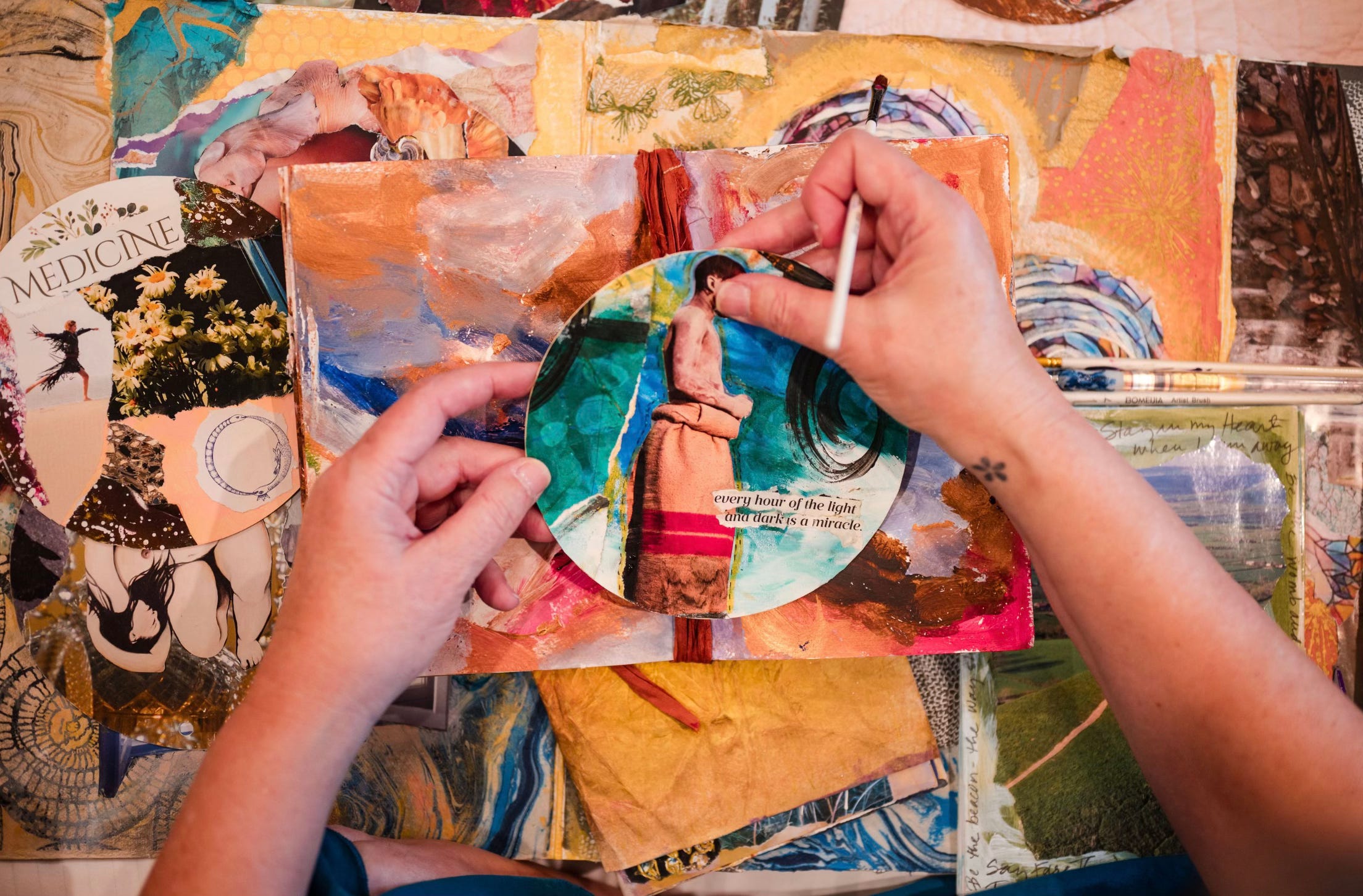
In my experience this is where art as process becomes such a powerful companion. When we engage images, materials and symbols through collage or other forms of expressive art we are not simply making something. We are engaging a way of listening. As we create we enter a world that is reflective and generative, where visual stories in our art begin to emerge and show us where we need to feel, understand and heal.
Art does not fix us.
It invites us to see, feel and heal that which is buried, harbored, held or too much to grapple with all at once. It engages the very systems in the brain, body, soul and spirit that allow repair to take place
One of the most important insights in modern trauma research is that healing does not mean erasing or forgetting what has happened. Healing is about integration. Experiences that overwhelm us can fragment our internal world. Memory, emotion and bodily response may become easily triggered or disconnected from one another.
Healing begins when these elements gradually reconnect in ways that feel tolerable and meaningful. Neuroscientists describe this as increasing communication across brain networks. Areas responsible for emotion, sensation, memory and reflection begin working together again. The nervous system slowly learns that the present moment is not the same as the past. Over time the body begins reorganizing around greater capacity.
This is why healing rarely happens through insight alone. Understanding something intellectually does not always resolve the imprint it has left in the body. The body must also participate.
Art making is embodied, active and energetic. We extend the body to express our art as we touch, tear, cut, arrange and layer. The art making in turn reflects us. It reflects both fragmentation and wholeness, the both and of human experience. Through this exchange we give form to what is active within us and begin to see it more clearly.
At the center of this process is the nervous system.
Our autonomic nervous system constantly scans for cues of safety or threat. When danger is perceived the body mobilizes survival responses such as fight, flight, freeze or flop. These responses are part of our intelligent embodied system and necessary, yet they can also be deeply distressing.
This is also where the human experience becomes raw and real.
Many of us know how the nervous system can shout its alarms, sometimes bringing us to our knees. Other times it appears as a small tightening of the heart that barely disturbs the surface while something seismic is moving underneath the skin. This is the human experience and it is why we need creative ways to explore the layers of what we carry.
When life contains prolonged stress, uncertainty or trauma the nervous system can remain chronically activated or shut down. The world right now often feels like a lit fuse of too much that is increasingly unsafe. Upheaval and rising hostility are powerful signals of threat for the human nervous system across many parts of the world. Many people are living in a constant state of vigilance as fear and uncertainty move through families, communities and cultures. Many are anxious and some feel marginalized by harm. Healing in times like these begins when the body experiences moments of regulation and the system recognizes that it is safe enough to soften its guard.
This is where art as process, expressive art practices and transformational art expand capacity in surprising ways.
When we work with imagery, materials and mixed media the brain activates several systems at once. Networks connected to imagination, emotional awareness and reflective thinking begin communicating with one another. This linking allows emotional experience to be infused with new awareness and meaning.
Creative engagement also influences the nervous system directly.
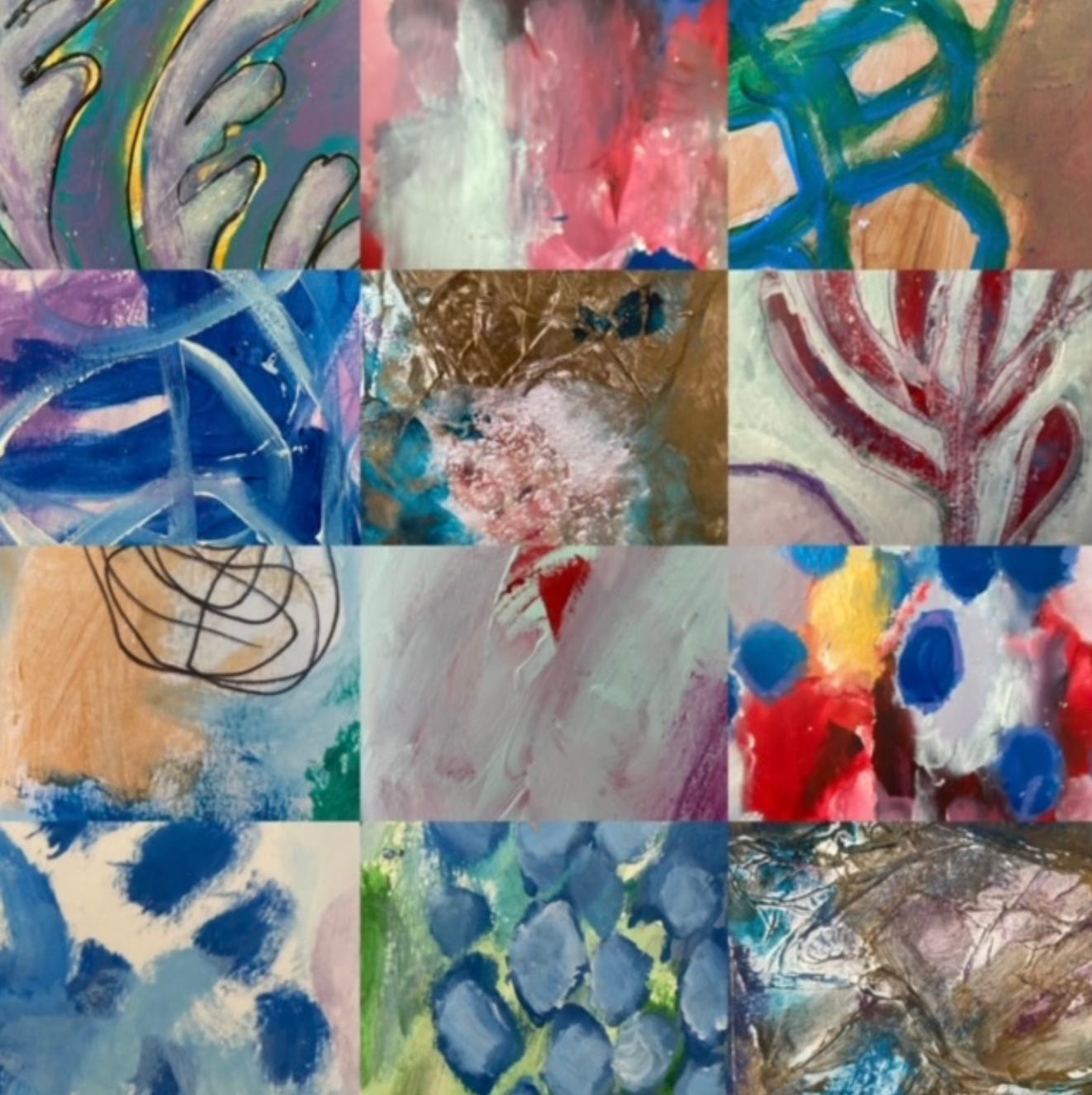
Research in expressive arts and neuroscience suggests that working with art materials can reduce stress hormones, increase dopamine which supports motivation and pleasure and activate the parasympathetic nervous system which supports rest and repair.
As attention settles and breath deepens the body moves out of cycles of vigilance and into a more regulated state.
Many people experience a sense of flow during art making. Time softens. The mind becomes absorbed in color, texture, image and form. For a nervous system that has been living in hyper alertness or numbness this state can feel surprising and deeply restorative.
Another key reason that visual arts support healing is that the psyche naturally communicates through symbol and image.
Long before we have words for experience we have sensation, metaphor and visual memory.
Dreams, myths and archetypal imagery are examples of how the psyche organizes meaning beyond linear language.
Transformational art intersects beautifully with this symbolic way of knowing. When we gather images, layer materials and follow intuitive choices aspects of the inner world often begin to appear on the page.
A path.
A doorway.
A landscape.
A figure.
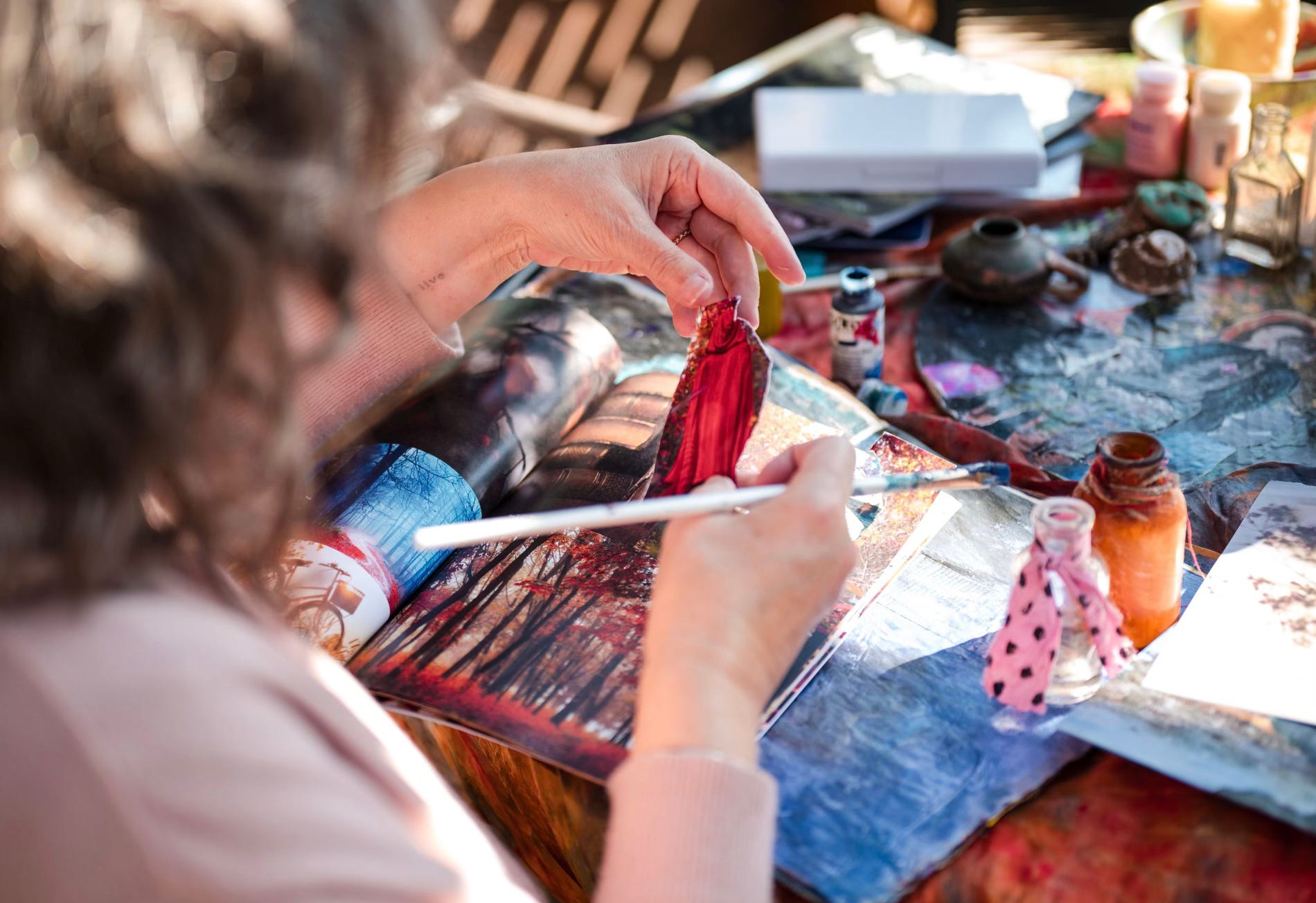
These images may carry emotional truth that words alone struggle to express.
Symbol allows complex material to be held safely. Instead of speaking directly about a wound the psyche might express itself through an image.
A broken bridge.
A forest path.
A locked door.
A bird in flight.
These images create both distance and access and allow meaning to emerge without overwhelming the system.
This is why art as process often leads to insights that feel deeply personal and difficult to explain. The psyche is communicating in its original language.
Another essential element of healing is agency.
Experiences of trauma or disruption often involve a loss of voice or control. Working through collage, mixed media or reflective art making gently restores participation.
Each small choice in the process becomes meaningful. What image to place, what color to add, what symbol to follow. These decisions remind the nervous system that we can respond and shape something in our lives again.
This restoration of choice, voice and agency is one of the profound gifts of depth work, art as process and reflective creative practice.
Healing itself is a journey, not a finished state.
It moves in cycles. Moments of clarity followed by moments of coming undone. Periods of expansion followed by times of reflection. Art as process accompanies these rhythms well because it allows awareness and movement between emotional states without becoming trapped in them.
In times of collective disruption this flexibility and resilience become even more important. Political instability, environmental concern, relational change and social fragmentation place strain on the nervous systems of individuals and entire communities. We are exposed to more information and emotional intensity than human beings were designed to process.
Creative practices offer a way to face change and metabolize experience.
They restore imaginal access and reflection when it would be easier to numb or turn away. They help us remain human and connected to healing and wholeness in difficult times.
As physician and author Rachael Naomi Remen writes,
“At the deepest level the creative process and the healing process arise from a single source. When you are an artist you are a healer. A wordless trust of the same mystery is the foundation of your work and its integrity.”
Healing rarely arrives in dramatic moments. More often it unfolds quietly through attention, presence and participation.
Sometimes it begins with an image that catches our eye. Sometimes with a feeling we finally allow ourselves to acknowledge. Sometimes with the simple act of making space for what is true.
Through reflection, symbol and creative exploration the story of our lives slowly reorganizes itself toward healing, awareness, compassion and possibility.
Healing does not ask us to erase what we have lived or ignore what the empathetic channel opens for some of us. It asks us to meet it all with awareness, creativity and compassion.
The psyche or soul calls us through challenge and moves toward wholeness in ways we may only recognize over time. It is hard to be human and when something old is stirred or grief returns it does not mean we are failing, flailing or moving backward. Sometimes it is the deeper intelligence of the psyche asking us to grow into a wider capacity.
As we begin to see our lives in cycles and spirals of time we discover deeper ways to explore and expand the journey.
Explore the experience in real time…ReStorying the Sacred Body opens this week.
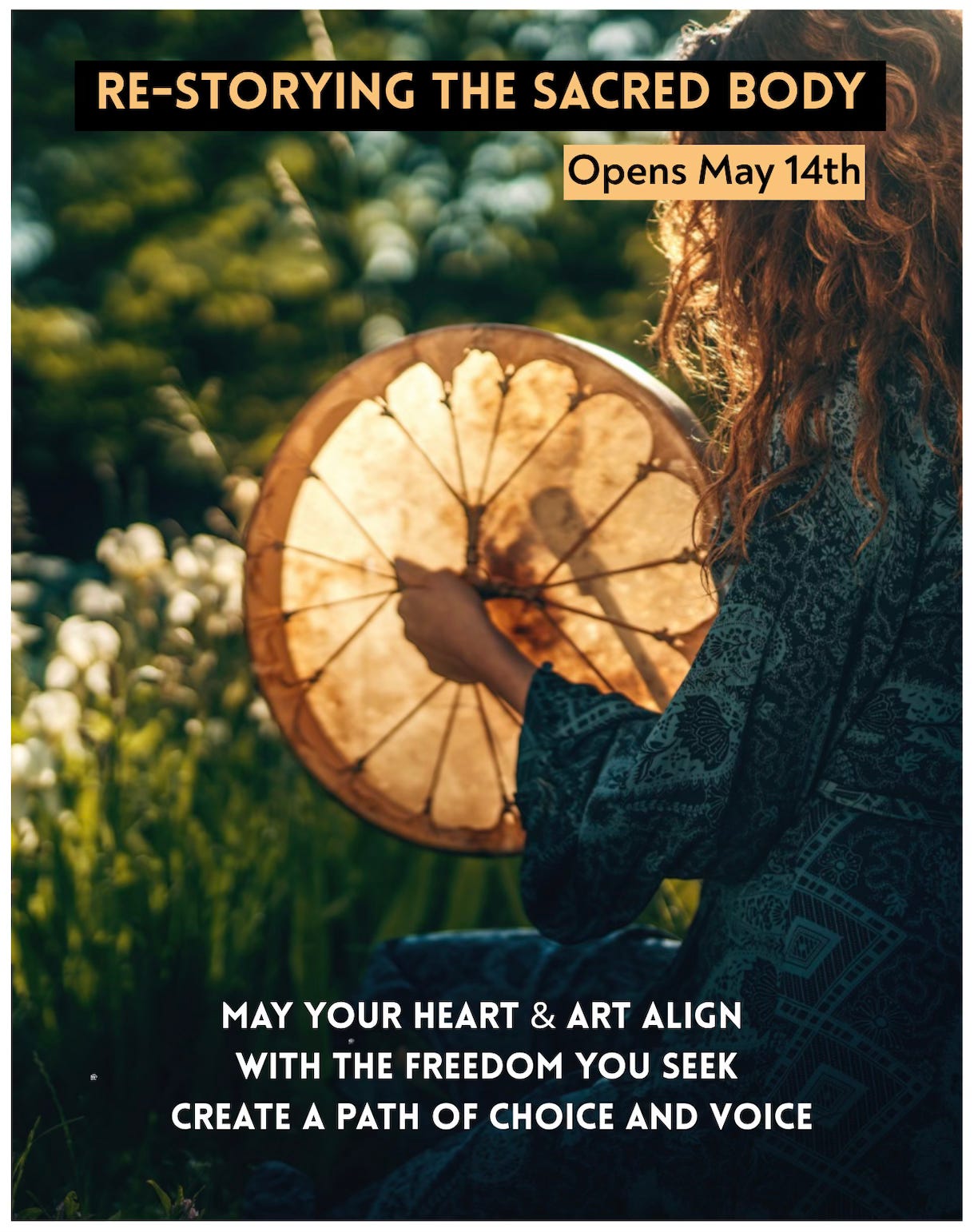
ReStorying the Sacred Body is a guided 12 week creative depth journey exploring art as process, mixed media, body mapping, intuitive art, movement, energy and reflective practice.
Together we explore the wisdom carried within the body and psyche, listening for what is ready to soften, emerge, heal and be restored through the creative process.
A Mythopoetic Life is rooted in my own experience with creative depth and the body of work that has shaped JourneyPath Institute. This is a living space where musings, ideas, and experiences are shared in the spirit of reflection, inspiration, and connection.